
Tarot cards have long fascinated people around the world, sparking debates about their use for divination across different cultures. As a Tarot cards supplier, I've witnessed the diverse ways these cards are perceived and utilized. In this blog, we'll explore whether Tarot cards can be used for divination in various cultural contexts.
The Origins of Tarot Cards
Tarot cards have a rich and complex history. Their exact origins are somewhat shrouded in mystery, but it's widely believed that they emerged in Europe during the 15th century. Initially, they were used for playing games, similar to modern - day card games. Over time, however, their use evolved, and they began to be associated with divination.
In Western cultures, Tarot cards are often linked to the occult and esoteric practices. The Rider - Waite Tarot deck, created in the early 20th century, is one of the most well - known and widely used decks. It features detailed and symbolic imagery that is used in divination readings. The Major Arcana, consisting of 22 cards, represents significant life events and spiritual lessons, while the Minor Arcana, with 56 cards, is more related to everyday situations.
Tarot in Western Divination
In Western divination, Tarot cards are used to gain insights into the past, present, and future. A Tarot reader shuffles the cards and then lays them out in a specific spread, such as the Celtic Cross. Each card's position in the spread has a particular meaning, and the reader interprets the combination of cards to provide guidance to the querent.


For example, the Fool card in the Major Arcana often represents new beginnings, innocence, and taking risks. If it appears in a reading, it might suggest that the querent is about to embark on a new adventure or make a significant change in their life. The interpretation of Tarot cards in Western divination is highly subjective and relies on the reader's intuition and knowledge of the cards.
Tarot in Non - Western Cultures
When it comes to non - Western cultures, the use of Tarot cards for divination is a more complex and varied phenomenon. In some cultures, Tarot cards have been adopted and adapted to fit local beliefs and practices.
In Latin American cultures, for instance, Tarot cards are sometimes integrated with traditional spiritual practices. They may be used in combination with other forms of divination, such as astrology or palmistry. The imagery on the Tarot cards can be reinterpreted to align with local cultural symbols and values.
In Asian cultures, the reception of Tarot cards for divination has been more mixed. Some people are intrigued by the novelty of Tarot and use it as a form of self - exploration. However, in more traditional Asian cultures that have their own well - established divination systems, such as I Ching in China or Omikuji in Japan, Tarot cards may not be as widely accepted.
The Scientific Perspective
From a scientific point of view, there is no empirical evidence to support the idea that Tarot cards can accurately predict the future. The interpretations in Tarot readings are often based on psychological projection and the power of suggestion. When a person receives a Tarot reading, they may be more likely to focus on information that confirms their existing beliefs or hopes.
However, this doesn't mean that Tarot cards have no value. They can serve as a tool for self - reflection and personal growth. The symbolic imagery on the cards can prompt people to think about their lives, make connections, and gain new perspectives.
Cultural Adaptation and Acceptance
The cultural adaptation of Tarot cards is an interesting aspect of their use in different cultures. As Tarot cards spread around the world, they have been modified to suit local tastes and beliefs. For example, some Tarot decks are created with cultural - specific imagery, such as African - themed Tarot decks or decks inspired by Native American cultures.
This cultural adaptation can make Tarot cards more accessible and relevant to people from different backgrounds. It also shows that the concept of using cards for divination can be flexible and adaptable.
Tarot as a Learning Tool
Beyond divination, Tarot cards can also be used as a learning tool. They can help people develop their intuition, improve their observation skills, and understand symbolic language. For those interested in learning about different cultures, Tarot cards can provide a window into the values and beliefs of various societies.
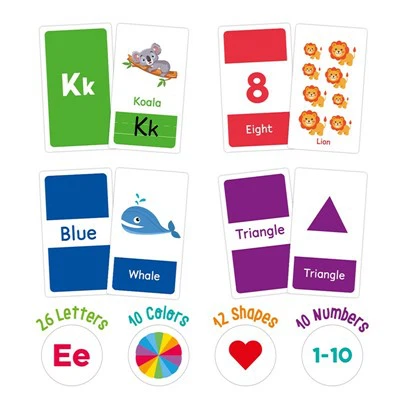
If you're interested in using Tarot cards for learning, we also offer a range of related products. You can check out our Colourful Flash Cards, Cards To Learn Words, and Flash Cards Multiplication Table. These products are designed to enhance learning in a fun and engaging way.
Conclusion
In conclusion, the use of Tarot cards for divination varies across different cultures. While they have a long - standing tradition in Western divination, their acceptance and use in non - Western cultures are more diverse. From a scientific perspective, the divinatory power of Tarot cards is not supported by evidence, but they can still serve as a valuable tool for self - reflection and learning.
As a Tarot cards supplier, we are committed to providing high - quality Tarot decks and related products. Whether you're a professional Tarot reader, a beginner interested in exploring the world of Tarot, or someone looking for unique learning tools, we have something to offer. If you're interested in purchasing our products or have any questions, we encourage you to contact us for a procurement discussion. We look forward to serving you and helping you on your Tarot journey.
References
- Decker, Ronald, Thierry Depaulis, and Michael Dummett. A History of the Occult Tarot, 1870 - 1970. State University of New York Press, 2002.
- Harte, Ronald. Tarot: History, Symbolism, and Divination. Ulysses Press, 2009.
- Marks, Rachel Pollack. Seventy - Eight Degrees of Wisdom: A Book of Tarot. HarperOne, 2009.