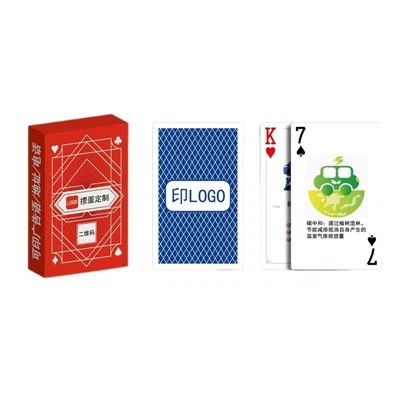

In the realm of early childhood education, the search for effective and engaging teaching tools is a never - ending journey. One such tool that has gained significant attention in recent years is educational playing cards. As a supplier of Educational Playing Cards, I have witnessed firsthand the transformative potential of these cards in early childhood education. In this blog post, I will explore whether educational playing cards can indeed be used in early childhood education, delving into their benefits, challenges, and practical applications.
The Benefits of Educational Playing Cards in Early Childhood Education
1. Engagement and Motivation
Young children are naturally drawn to play. Educational playing cards transform learning into a fun and engaging activity. The colorful designs, interesting themes, and interactive nature of the cards capture children's attention and keep them motivated. For example, cards featuring animals, fairy tales, or numbers can spark a child's curiosity and eagerness to learn. When children are having fun, they are more likely to actively participate in the learning process, which can lead to better retention of information.
2. Skill Development
Educational playing cards can target a wide range of skills in early childhood. They can help develop cognitive skills such as memory, attention, and problem - solving. For instance, memory games using cards require children to remember the location of specific cards, enhancing their short - term memory. Additionally, cards can be used to teach language skills, including vocabulary, reading, and writing. By associating words with pictures on the cards, children can learn new words in a more concrete and memorable way.
3. Social Interaction
Playing card games often involves multiple players, which provides an excellent opportunity for children to develop social skills. They learn how to take turns, share, and communicate with their peers. Cooperative card games can also teach children the value of teamwork and collaboration. For example, in a game where children have to work together to achieve a common goal, they learn to support and encourage each other.
4. Customization and Adaptability
One of the great advantages of educational playing cards is their flexibility. They can be customized to meet the specific needs and interests of different children. Teachers and parents can choose cards that align with the curriculum or the child's learning goals. Moreover, the difficulty level of the cards can be adjusted as the child progresses. For example, beginner - level cards may have simple pictures and basic concepts, while more advanced cards can introduce complex ideas and challenging tasks.
Challenges in Using Educational Playing Cards
1. Quality and Design
The quality of educational playing cards is crucial. Low - quality cards may be easily damaged, which can be frustrating for children and limit their usability. Additionally, the design of the cards should be age - appropriate and visually appealing. If the cards are too cluttered or the images are unclear, it can be difficult for children to understand the information presented.
2. Appropriate Use
To maximize the benefits of educational playing cards, they need to be used in the right way. Teachers and parents may need some training on how to incorporate the cards into their teaching or parenting strategies. For example, simply handing the cards to a child without any guidance may not lead to effective learning. It is important to provide clear instructions and facilitate meaningful interactions with the cards.
3. Limited Content
Some educational playing cards may have limited content, which can restrict their long - term use. As children grow and their learning needs change, they may quickly outgrow the cards. To address this issue, it is important to have a variety of cards available or to update the cards regularly.


Practical Applications of Educational Playing Cards
1. Classroom Settings
In the classroom, educational playing cards can be used in a variety of ways. Teachers can use them for group activities, such as card games that reinforce math concepts, language skills, or science knowledge. For example, a teacher can use Irregularly Shaped Cards to teach geometry by having students identify different shapes. Cards can also be used for individual learning, allowing students to practice at their own pace.
2. Home Learning
At home, parents can use educational playing cards to supplement their child's learning. They can play card games with their children during family time, which not only helps with learning but also strengthens the parent - child bond. For example, parents can use cards to teach their children about different cultures, history, or nature.
3. Special Education
Educational playing cards can be particularly beneficial for children with special needs. They can be adapted to meet the specific learning requirements of these children. For example, cards with large, clear images and simple instructions can be used to help children with visual or cognitive impairments.
Our Offerings as an Educational Playing Cards Supplier
As a supplier of Educational Playing Cards, we are committed to providing high - quality, engaging, and educational products. Our cards are designed by a team of experts in early childhood education, ensuring that they are age - appropriate and aligned with educational standards.
We offer a wide range of card sets, including those focused on different subjects such as math, language arts, science, and social studies. Our Merchandise Collectible Cards are not only educational but also have a collectible aspect, which can further motivate children to learn.
In addition, we provide customization services. If you have specific learning goals or themes in mind, we can create unique card sets tailored to your needs. Whether you are a school, a daycare center, or a parent looking for educational resources for your child, we can work with you to develop the perfect card set.
Conclusion
In conclusion, educational playing cards can be a valuable tool in early childhood education. They offer numerous benefits, including engagement, skill development, social interaction, and customization. While there are some challenges in using them, these can be overcome with proper planning and implementation.
If you are interested in exploring the use of educational playing cards in your early childhood education setting, we would be more than happy to discuss your needs and provide you with the best solutions. Contact us to start a conversation about how our educational playing cards can enhance the learning experience of young children.
References
- Bredekamp, S., & Copple, C. (1997). Developmentally appropriate practice in early childhood programs serving children from birth through age 8. National Association for the Education of Young Children.
- Ginsburg, K. R. (2007). The importance of play in promoting healthy child development and maintaining strong parent - child bonds. Pediatrics, 120(1), 182 - 191.
- Vygotsky, L. S. (1978). Mind in society: The development of higher psychological processes. Harvard University Press.